













Soil Testing Laboratory
Soil is a crucial and necessary foundation for plant growth and is a supremely important resource of our country. More than 54% of our workforce either directly depends on agriculture for their livelihood, or through allied activities. Therefore, the health of soil affects more than 54% of our workforce! Soil health is fundamental to the food system in the country. It forms the bedrock of agriculture and serves as the vital medium for the growth of food-producing plants. When soils are healthy, they yield higher productivity of nutritious crops that provide nourishment for both humans and animals. It's important to recognize that the quality and quantity of our food are directly connected to the quality of our soils. Therefore, prioritising soil health is essential for ensuring the availability of high-quality and abundant food for all and reducing dependency on other countries for agricultural produce.
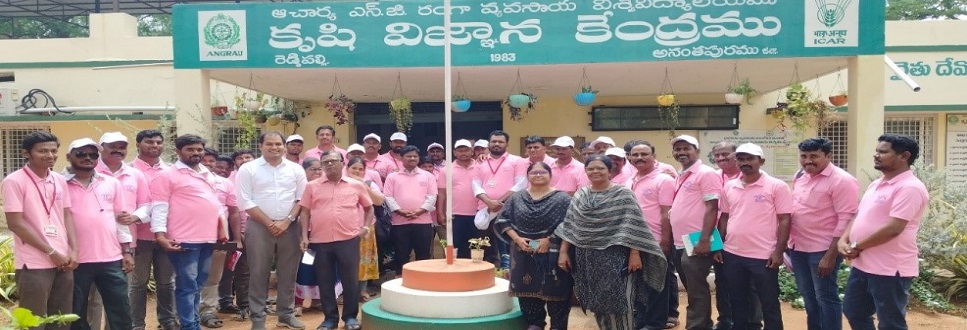
Soil testing laboratory started in year 2006 at Krishi Vigyan Kendra, Reddipalli under Acharya N.G. Ranga Agricultural University with the aim of service to the farmers. KVK promotes efficient & balance use of fertilizers by providing farmers Soil Health Cards by soil testing including pH & EC. The modern soil testing lab at KVK Reddipalli has a capacity to test 2000 samples per annum. Soil and water analysis is done at soil testing laboratory, KVK, Reddipalli.
Soil physico chemical properties like pH, EC and chemical properties like organic carbon, available nitrogen, available phosphorus and available potassium were estimated using standard procedures. The given soil samples were categorized into low, medium and high. Water samples were analysed for pH, EC, calcium, magnesium, carbonates, bicarbonates, sodium and potassium, SAR, RSC and categorized into four classes A, B, C and D
|
S.No. |
Year |
No. of soil samples analysed |
No. of water samples analysed |
Area covered (ha) |
Soil health cards distributed |
|
1. |
2006 |
124 |
11 |
248 |
124 |
|
2. |
2007 |
231 |
26 |
462 |
231 |
|
3. |
2008 |
254 |
33 |
508 |
254 |
|
4. |
2009 |
431 |
85 |
862 |
431 |
|
5. |
2010 |
585 |
53 |
1170 |
585 |
|
6. |
2011 |
689 |
45 |
1378 |
689 |
|
7. |
2012 |
810 |
110 |
1620 |
810 |
|
8. |
2013 |
1558 |
981 |
3116 |
1558 |
|
9. |
2014 |
1351 |
1202 |
2702 |
1351 |
|
10. |
2015 |
687 |
288 |
1374 |
687 |
|
11. |
2016 |
485 |
192 |
970 |
485 |
|
12. |
2017 |
559 |
107 |
1118 |
559 |
|
13. |
2018 |
1117 |
150 |
2234 |
1117 |
|
14. |
2019 |
571 |
109 |
1142 |
571 |
|
15. |
2020 |
485 |
79 |
970 |
485 |
|
16. |
2021 |
672 |
183 |
1344 |
672 |
|
17. |
2022 |
955 |
1910 |
1910 |
955 |
|
18. |
2023 |
1209 |
212 |
2524 |
50 |
|
Total |
12773 |
5776 |
25652 |
11614 |
|
What are the benefits of Soil testing?
1. Nutrient Management
a. Soil testing helps determine the nutrient content and pH status of the soil.
b. By knowing the nutrient status of the soil, farmers can apply fertilisers and soil amendments more precisely, matching the specific needs of the crops or plants being grown.
2. Cost Efficiency
a. Soil testing helps optimise fertiliser and nutrient management, leading to cost savings for farmers.
b. By applying fertilisers based on the soil test results, farmers can avoid unnecessary or excessive fertiliser applications, reducing input costs.
3. Environmental Protection
a. Soil testing promotes environmental stewardship by minimising nutrient runoff and leaching into water bodies.
b. Excessive use of fertilisers can contribute to water pollution, causing eutrophication and harming aquatic ecosystems.
4. Crop Yield Optimization
a. Soil testing provides valuable information about the nutrient availability in the soil, enabling farmers to adjust their management practices to maximise crop yields.
5. Soil Health Assessment
Soil testing helps assess the overall health and fertility of the soil. It provides insights about soil organic matter content, soil structure, and other soil properties that impact plant growth.
6. Customised Recommendations
Soil testing results are accompanied by customised recommendations for soil amendments, fertilisers, and pH adjustments based on the specific requirements of the crops or plants being grown.
Soil sample collection procedure:


